
The Future Airborne Capability Environment (FACE) Approach was first released in 2010 through a set of documents published by the Open Group FACE Consortium. The primary goal of the FACE approach is to enhance portability of software components from one operating environment to another, resulting in cost savings and improved warfighting capabilities.
The FCP is an optional module available for the LDRA tool suite.
FCP is an enhancement to the LDRA tool suite to support all five segments of the FACE reference architecture, by means of complementary automated software testing and conformance assurance.

The LDRA tool suite generates artifacts from testing, code reviews, and external sources and references them to the FACE Conformance Verification Matrix (CVM). The FACE Conformance Test Suite (CTS), invoked from within the LDRA tool suite, then provides the obligatory evidential artifacts in readiness for submission to the Verification Authority (VA).
The FCP includes coding rules designed to ensure compliance with many coding requirements specified in the FACE Technical Standard.
Additionally, the FCP includes extensions to the TBmanager component of the LDRA tool suite. These simplify and automate traceability between the requirements in the FACE Conformance Verification Matrix and the documentary evidence that software suppliers must include in their FACE Unit of Conformance (UoC) verification package. The capabilities of the FCP improve quality while reducing the time, effort, and risk of developing FACE UoCs.
The TBmanager component of the LDRA tool suite facilitates the import of any of the FACE architectural segments. Importing a segment initiates the creation of a TBmanager project and tree containing a complete set of objectives, each correlating to the requirement that is defined in the FACE Technical Standard for the selected segment.

The newly created TBmanager project will include only those requirements from the FACE Conformance Verification Matrix (CVM) that are relevant to the selected FACE architectural segment, supplemented by “Software Supplier Artifact – Cross Reference” placeholders for the artifacts that must be generated for proof of conformance.

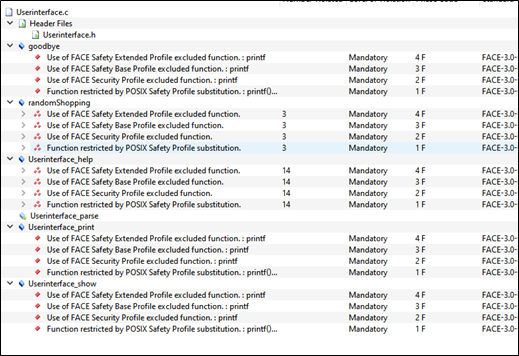
The FACE Technical Standard restricts the use of certain API calls while requiring others. Non-conformant calls listed in the FACE Technical Standard and other FACE coding violations can be detected statically by the LDRA tool suite’s TBvision component. For example, the checks for adherence to specific sections of the POSIX Application Program Interface (API) ensures that the UoC function signatures are syntactically correct, enforcing the proper use of critical language constructs. The FACE coding rules can be applied in isolation, or alongside others – perhaps from MISRA or CERT.
The FCP support versions 2.1.1, 3.0, and 3.1 of the FACE Technical Standard.
Email: info@ldra.com
EMEA: +44 (0)151 649 9300
USA: +1 (855) 855 5372
INDIA: +91 80 4080 8707