^

Products

Products

LDRA Productivity Package for Automotive

The LDRA Productivity Package for Automotive is a set of targeted capabilities drawn from the LDRA tool suite enabling customers to achieve ISO 26262 compliance through to Automotive Safety Integrity Level (ASIL) D, the highest level of assurance for automotive software. The productivity package also supports the development of software in accordance with Automotive SPICE® (Automotive Software Process Improvement Capability dEtermination, or ASPICE) processes and practices, and optionally with cybersecurity standard ISO/SAE 21434.

How does the LDRA Productivity Package for Automotive help with compliance challenges?

This LDRA Productivity Package tackles the pain points that make compliance demanding and time-consuming across the development lifecycle – up to and including Automotive Safety Integrity Level D (ASIL D) – in support of a plan for software aspects of certification.
The package brings together LDRA’s best-in-class capabilities for the development and verification of automotive software. Its flexibility and scalability support the evolving needs of complex projects and promote collaboration across large and small teams alike, making it suitable for use at any stage of the software lifecycle.

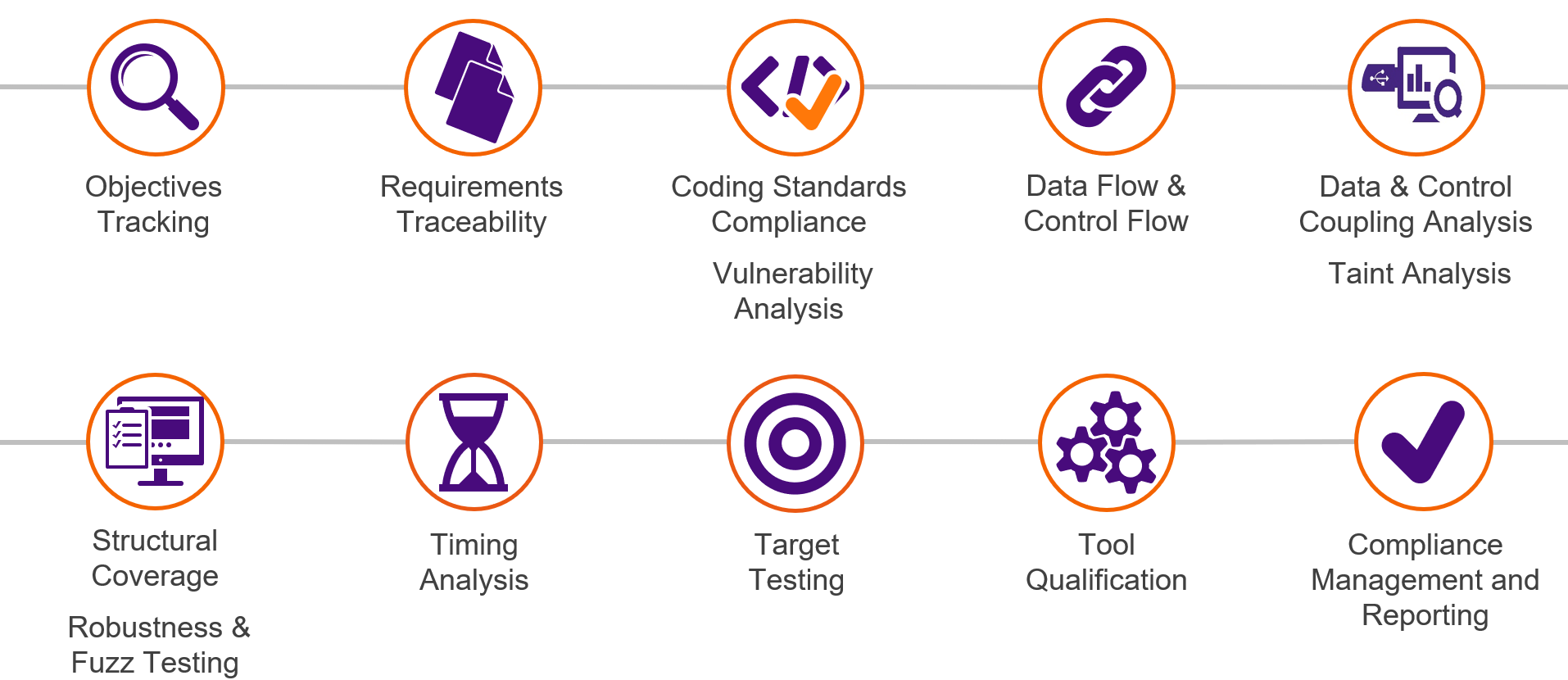
It simplifies key verification activities, such as

In doing so, the package reduces the compliance burden on engineering teams. Its comprehensive feature set also makes it equally applicable to automotive OEMs and suppliers developing software to varying levels of functional safety and cybersecurity assurance.
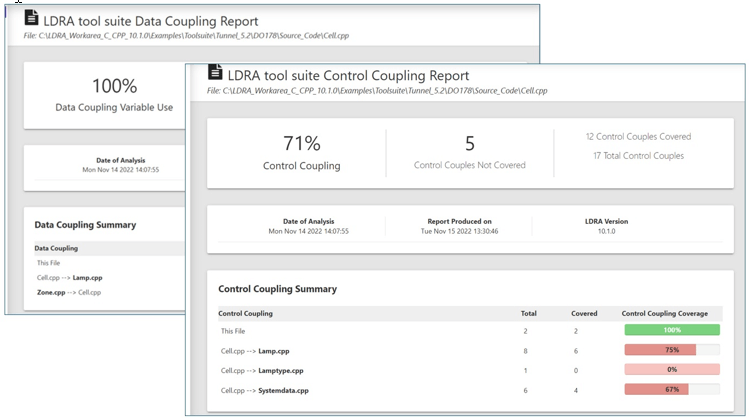
How can consistency and visibility be maintained in automotive software verification?

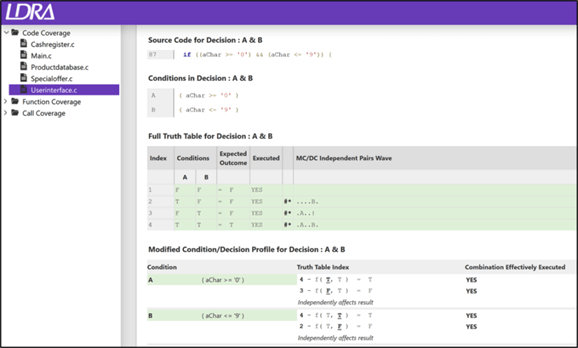
The LDRA Productivity Package for Automotive provides project-level reporting that unifies static and dynamic analysis results, coverage data, and traceability information in a consistent format. This promotes efficient review cycles and helps maintain the evidence needed in support of a plan for software aspects of certification, ensuring safety and process assurance throughout the development lifecycle.

By centralising analysis results, coverage metrics, and traceability information, web-based reporting strengthens configuration control and supports collaboration between OEMs, suppliers, and distributed engineering teams. It also improves supply-chain visibility and enables the reuse of verification evidence across derivative systems and product variants.

For larger or multi-site projects, LDRAvault extends the Productivity Package with these advanced reporting and data management capabilities, supporting compliance activities aligned with standards such as ISO 26262, ASPICE, and ISO/SAE 21434.

How can MC/DC coverage be demonstrated in automotive software?

The LDRA Productivity Package for Automotive integrates dynamic structural coverage analysis including MC/DC. In combination with requirements-based testing, it enables users to

  • Measure coverage from unit to system level
  • Review results and identify gaps
  • Report evidence directly for ISO 26262 ASIL D compliance

It provides the evidence required to demonstrate compliance with the pertinent ISO 26262-6 objectives for ASIL D. All the analysis, correlation, and reporting needed to demonstrate MC/DC coverage are built into the package.

How can MC/DC coverage be demonstrated in automotive software?

How can implemented automotive code be shown to match design intent?

Although ISO 26262 does not explicitly reference data and control coupling analysis, it requires verification that software implementation accurately reflects the intended architecture and does not introduce unintended dependencies.

The LDRA Productivity Package for Automotive provides data and control coupling analysis capabilities that contribute to the achievement of this objective by examining data and control interactions to confirm that code behaviour remains consistent with the design model. This helps identify unintended functionality, demonstrates alignment with the safety and integrity goals defined at the system and software design levels, and supports the verification of freedom from interference between software components.

How can implemented automotive code be shown to match design intent?

How can the time and cost of tool qualification for automotive projects be minimized?

ISO 26262 requires that software tools used in the development and verification of safety-related systems be qualified to ensure their results can be trusted without additional verification. The LDRA Productivity Package for Automotive supports this requirement through TÜV-certified tools and Tool Qualification Support Packs (TQSP, or Qualification Kits) that provide the necessary evidence and documentation to demonstrate tool confidence.

The package supports qualification in accordance with ISO 26262-8, Clause 11 through:

  • TÜV-certified tools (up to ASIL C)
  • Optional Tool Qualification Support Packs (TQSPs) for ASIL D

Although ASPICE does not prescribe a formal tool qualification process, it expects that tools and methods be justified and subject to quality assurance under its support processes. The LDRA tool suite meets these expectations through its certified pedigree, comprehensive traceability, and audit capabilities, enabling organizations to demonstrate confidence in their verification environment within ISO 26262, ASPICE, and other automotive frameworks.

How can collaboration between automotive developers, testers, and compliance teams be coordinated?

The LDRA Productivity Package for Automotive integrates requirements traceability, verification management, and reporting aligned with ISO 26262, ASPICE, and ISO/SAE 21434, enabling all stakeholders to share a single, trusted source of verification evidence. This strengthens audit readiness and promotes collaboration between development, validation, functional safety, and cybersecurity teams throughout the automotive lifecycle.

How can autonomous vehicle software be supported through deterministic software verification?

AI- and ML-based systems are central to the development of autonomous and driver-assist technologies. While they challenge traditional approaches to the design and verification of safety-critical software, they also present new opportunities for innovation and efficiency.

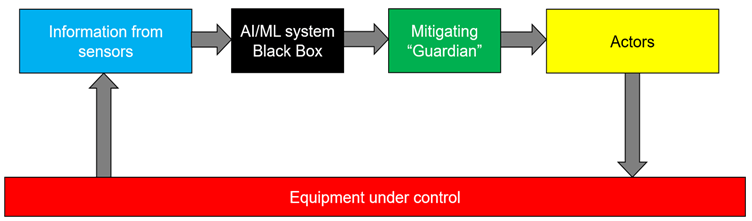
The systems developed by autonomous vehicle software companies rarely operate independently. Their interaction with deterministic control logic allows established best practices in areas such as risk analysis, domain separation, and functional safety assurance to continue providing an effective mitigating “guardian” against potential hazards – just as they are leveraged in traditional safety-critical automotive contexts, such as vehicle dynamics software.

AI/ML mitigating guardian illustration

However, relying solely on conventional mitigation is only a short-term strategy. To fully realise the benefits of AI and ML in safety-critical automotive systems, the evolution of standards specifically addressing these technologies is essential, and LDRA are actively supporting those efforts.

In the meantime, the LDRA Productivity Package for Automotive provides a robust foundation for this transition. It delivers the analysis, verification, and traceability capabilities needed to integrate emerging AI/ML technologies within established safety and compliance frameworks such as ISO 26262 and ISO/SAE 21434.

It also fits naturally into ADAS/AD toolchains, supporting the development of autonomous and highly automated vehicles while maintaining the rigour expected of safety-critical automotive software.

How can predictable software performance for single & multicore automotive real-time systems be demonstrated?

Add-on capabilities such as worst-case execution time (WCET) analysis enable developers to evaluate timing behaviour under real or simulated conditions. By supporting both early timing analysis of individual code components and comprehensive end-to-end assessment at system level, the LDRA Productivity Package for Automotive helps teams build timing evidence progressively.

This supports the demonstration of deterministic performance and compliance with the timing and execution requirements defined in ISO 26262. This helps to ensure that real-time automotive systems perform reliably across single- and multicore architectures, supporting integration with AUTOSAR timing frameworks where applicable.

How can safe and secure software connectivity be assured?

Modern automotive systems depend on extensive in-vehicle and external connectivity, linking safety-critical controllers with infotainment, telematics, and cloud services. To ensure ISO 26262 and ISO/SAE 21434 compliance, such interactions must be shown to ensure data integrity, functional correctness, and protection against unintended interference.

The LDRA Productivity Package for Automotive supports these objectives. For example, the analysis of data and control flow across software interfaces helps to confirm that inter-component communications behave as intended and remain free from unintended dependencies. By integrating these checks and others within the wider verification process, the package helps establish confidence in both the safety and cybersecurity of connected vehicle architectures.

How can software assurance be maintained through over-the-air automotive updates?

It is important to demonstrate following over-the-air (OTA) software updates that changes preserve functional safety and cybersecurity. Regulations such as UNECE R155 and R156 require robust processes for managing configuration, validation, and auditability throughout a vehicle’s lifetime. ISO/SAE 21434 is also pertinent here.

The LDRA Productivity Package for Automotive enables this continuity by maintaining end-to-end traceability between requirements, code, and verification artefacts. Its change-impact analysis and automated reporting capabilities allow teams to re-verify only the affected components, ensuring that each update can be released with demonstrable assurance and full lifecycle evidence.

How can verification evidence be reused across derivative automotive systems and product variants?

Reuse of software components is increasingly attractive in platform-based automotive development, but ISO 26262 places strict limits on what can be claimed as “proven-in-use”. Even minor code or configuration changes generally require renewed verification to maintain safety integrity.

The LDRA Productivity Package for Automotive supports this controlled approach to reuse through comprehensive traceability and automated re-verification. Existing tests can be re-executed automatically in the new environment, with results linked directly to requirements and prior verification evidence. This enables teams to confirm compliance efficiently when reusing or adapting code across vehicle platforms, maintaining alignment with ISO 26262 and ASPICE expectations while avoiding unnecessary duplication of effort.

How can safety and cybersecurity assurance be aligned across the lifecycle?

Modern vehicles combine safety-critical control with extensive connectivity, making it essential that safety and cybersecurity assurance be managed together. ISO 26262 and ISO/SAE 21434 both recognise the need to coordinate these disciplines, ensuring that safety mechanisms are not compromised by security measures, and that security controls do not introduce new functional risks.

The LDRA Productivity Package for Automotive provides a unified verification framework that supports both safety and cybersecurity objectives. By maintaining consistent traceability from requirements through analysis, testing, and reporting, it enables teams to align safety- and security-related evidence and coordinate assurance cases across the lifecycle.

The same capabilities also support compliance with ISO 26262, ISO/SAE 21434, and ASPICE, and help organisations demonstrate adherence to regulatory frameworks such as UNECE R155 which mandates a cybersecurity management system for vehicle type approval.

Understanding the LDRA Productivity Package for Automotive

This LDRA Productivity Package brings together the tools and capabilities needed to manage the complexity of modern safety- and security-critical software development.

What are the LDRA Productivity Packages?

LDRA Productivity Packages are preconfigured bundles that combine LDRA’s static and dynamic analysis, certification-focused reporting, and optional extensions like requirements traceability and tool qualification. Each package is tailored to specific industry standards and project goals—whether focused on functional safety, quality, or cybersecurity—providing scalable, compliance-ready solutions that accelerate assurance and improve software productivity.

How does the LDRA Productivity Package for Automotive build upon traditional LDRA tools?

The LDRA Productivity Package for Automotive brings together long-established, field-proven components of the LDRA tool suite, including TBvision, TBrun, and TBmanager, together with add-on modules selected for automotive development needs.

Building on these proven technologies, the package delivers additional value through preconfigured workflows aligned with automotive standards and levels of application criticality, including ISO 26262 ASILs. This ready-made configuration accelerates deployment, removes the need for deep tool customisation, and ensures consistent interpretation of complex compliance objectives.

Out of the box, the package applies the correct objectives, metrics, and reporting structures for ISO 26262 and related frameworks, enabling faster, more uniform adoption across development teams and projects. Its capabilities also extend naturally to processes governed by ASPICE and ISO/SAE 21434, supporting broader assurance and process improvement goals.

What does the LDRA Productivity Package for Automotive offer?

The LDRA Productivity Package for Automotive delivers a comprehensive, preconfigured tool suite designed to meet the stringent requirements of safety- and mission-critical software development. Combining powerful static and dynamic analysis, requirements traceability, and verification management, it streamlines the development of automotive technology in accordance with applicable standards – helping teams achieve certification objectives efficiently and with confidence.

The package offers:

Together, these capabilities provide an integrated, ready-to-deploy solution. They accelerate compliance, strengthen assurance, and enhance productivity across the software development lifecycle, making the package equally suited to the needs of automotive OEMs, Tier 1 suppliers, and specialist software developers.

Which software analysis techniques are deployed by the LDRA Productivity Package for Automotive?

The LDRA Productivity Package for Automotive combines static and dynamic analysis to deliver comprehensive verification against functional safety and cybersecurity objectives.

Static analysis assesses code quality Code quality metrics (including Hersteller Initiative Software metrics (HIS)) and enforces compliance with industry coding standards such as MISRA, CERT, and CWE, while also supporting user-defined rule sets. These capabilities enable development teams to detect software issues early, preserve code integrity, and demonstrate adherence to the demanding requirements of automotive software development.

Dynamic analysis capabilities extend across unit, integration, and system-level testing—whether performed on simulators or target hardware.

  • Structural coverage analysis, including MC/DC, provides clear visibility of test completeness and supports requirements-based and on-target verification.
  • Analysis of data and control coupling helps confirm that software behaviour aligns with design intent, ensuring the implemented code meets the safety and reliability expectations of automotive systems.

What reporting capabilities does the LDRA Productivity Package for Automotive offer?

Reporting from both static and dynamic analyses is tailored to automotive industry expectations and aligned with the objectives of ISO 26262, with optional support for ISO/SAE 21434. The package also automates source code checking for compliance to HIS source code metrics throughout the development life cycle, and can underpin an ASPICE framework particularly with reference to evidence traceability and process visibility.

Optional extensions enhance the package with capabilities including:

  • Requirements traceability
  • Web-based verification and coverage reporting
  • Worst-case execution time (WCET) analysis
  • Taint analysis
  • Tool qualification support

Together, these features provide a comprehensive toolkit for achieving the highest levels of assurance in the development of safety- and security-critical automotive software, supporting compliance from concept through validation and type approval.

Additional information

FREE 30 Day
TRIAL

Email Us

Email: info@ldra.com

Call Us

EMEA: +44 (0)151 649 9300

USA: +1 (855) 855 5372

INDIA: +91 80 4080 8707

Connect with LDRA