
The first Embedded World North America event marks a significant milestone in the evolution of the embedded systems community. From its modest beginnings, Embedded World has become a prominent global platform for sharing technical information, acting as a central hub for engineers and industry professionals.
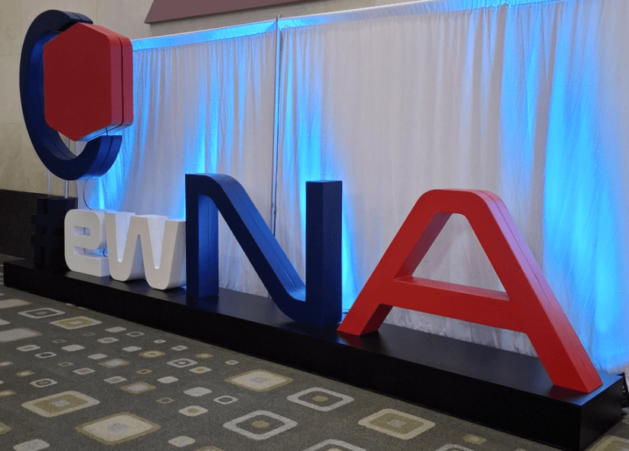
Embedded World’s scope changed along with the development of the embedded industry. What started off as a display for basic microcontrollers turned into a thorough investigation of potent edge computing systems, greatly inspired by developments in artificial intelligence. This change captured the quick technology innovations that defined the embedded scene in recent years.
Along with highlighting technology developments, the North American edition sought to close gaps across several worldwide organizations and disciplines inside the embedded world. This link proved to be rather important, as cooperation was necessary to promote creativity and handle the difficult problems the sector confronted. The event fostered a feeling of community among engineers and practitioners from several backgrounds by combining several areas of knowledge and points of view.
The keynote speech, given by Silicon Labs President and CEO Matt Johnson, a leader in IoT and wireless embedded systems, was among the highlights of Embedded World North America. In his speech, Johnson provided ideas on the direction that embedded systems would go in and how technology developments will transform the scene by 2035. Headquartered in Austin, Texas, where the event took place, Silicon Labs is positioned to spearhead this change.
Johnson gestured to the rising importance of AI and how it will act as a spur for embedded IoT development. Johnson underlined that AI is not just about developing smarter gadgets but also about managing the enormous volumes of data produced by IoT systems, as the business has already achieved major advancements in AI-powered edge computing. AI processing of this data will provide more intelligent and efficient systems able to solve previously unresolved issues.
Daniel Cooley, CTO Silicon Labs, who has been crucial in forming the research and development strategy of the business, also spoke at the event. Particularly in light of AI and quantum computing, Cooley offered observations on how Silicon Labs is handling the security and regulatory issues confronting the embedded systems sector.
Field-programmable gate arrays (FPGAs) have helped Gowin Semiconductor become a pioneer since its founding in 2014. Renowned for its original and sophisticated FPGA solutions, Gowin has often kept ahead of the curve, especially in the automotive industry, including autonomous vehicles and electric vehicles, with a keen eye toward the Chinese market.
According to CEO Jason Zhu, one of the main characteristics of Gowin’s FPGAs is their remarkable dependability. Their zero-failure parts per million from consumers is evidence of this dependability, and China’s strong drive in the automotive sector helps Gowin’s FPGAs to be a recommended choice for industrial and automotive uses. Their reputation in these fields is strengthened even more by their capacity to satisfy strict qualifying criteria.
Although the industry is advancing toward lower nodes, Gowin notes that FPGAs’ performance and cost restrictions make getting to 2 nm presently unworkable. Rather, the company concentrates on besting its current technology to provide exceptional performance. Apart from uses in the automobile industry, Gowin is making notable progress in AI. Its FPGAs provide a blend of great processing power and energy economy, hence supporting AI workloads. For next-generation AI applications, in which lowering power consumption while boosting processing capacity is vital, they are perfect. Looking forward, Gowin views consumer electronics as the next front for FPGA technology. The company wants to stay at the forefront of technical developments by always innovating and adjusting to deliver its sophisticated FPGA solutions to a wider spectrum of applications.
 (left) Jason Zhu, CEO, Gowin Semiconductor, (right) Maurizio Di Paolo Emilio, Embedded.com Editor-in-Chief
LDRA has been a key player in the software analysis industry for over 40 years, primarily serving the software engineering community focused on critical embedded systems. Its tools address functional safety and security, helping customers comply with stringent industry standards such as DO-178 (aerospace), ISO 26262 (automotive) and IEC 61508 (industrial controls). LDRA’s suite enables traceability from requirements through development and testing, ensuring that every software component aligns with safety and security specifications.
According to Jim McElroy, VP of sales and marketing at LDRA, the company provides static and dynamic analysis tools, allowing developers to examine code for quality and behavior at various stages. Static analysis occurs early in development, while dynamic analysis assesses runtime performance on target hardware. This dual approach is crucial for sectors such as automotive and aerospace, where safety is paramount. LDRA’s recent partnerships, including those targeting the RISC-V architecture and integration with platforms such as BlackBerry QNX, demonstrate its commitment to adapting to emerging technologies. By automating compliance verification processes, LDRA equips its customers to confidently navigate the complexities of modern software development while adhering to rigorous safety standards. The company’s focus on deep analysis distinguishes it from competitors that provide only superficial checks, making it a trusted partner in the critical embedded systems market.
 (left) Jim McElroy, VP of sales and marketing at LDRA, (right) Maurizio Di Paolo Emilio, Embedded.com Editor-in-chief
Focusing on mobile and GPS antennas, Taoglas, a top antenna design and production company, has been operating for 20 years. Though antennas are its main products, it also produces speakers, Ethernet connections and RF cables. Taoglas specializes in the sophisticated design needs of cellular and GPS systems, which most businesses outsource because of the related technical engineering.
Taoglas depends on innovation, as the industry is always changing and calls for fast developments such as 5G, multi-band GPS and Wi-Fi 7. Its R&D is focused on novel materials and design modifications to guarantee its antennas fit in ever smaller areas, thereby preserving performance. The company’s material science research covers materials such as TerraBlast, a smaller, less expensive option for uses such as drones and electro-ceramics.
To keep abreast of market trends, Taoglas’s strategy also stresses cooperation with semiconductor makers, module vendors and research institutes. From transportation to healthcare, their antennas are utilized in many different fields; their creative ideas, including merging many antennas in one device, lower installation times and interference, thereby redefining industry norms.
With the launch of its creative AntJack solution, meant to solve a shared IoT and connection issue, Taoglas made a big impression at Embedded World. For devices with limited space, AntJack is a Wi-Fi antenna combined with an Ethernet connection. A major issue for high-density wireless applications, antenna separation and minimal interference aid to maximize performance with this innovative design.
According to Taoglas CEO Dermot O’Shea, the AntJack replaces the requirement for closely spaced outside antennae, which frequently results in interference-related performance loss. Taoglas presents a small, space-efficient solution free from signal-quality compromise by combining the antenna with the Ethernet socket. Specific target products include IoT devices, industrial automation and smart city applications in which space restrictions are common and high-performance connection is crucial.
With an eye on mission-critical data, Tuxera has been a major participant in the embedded market since 1983, providing strong solutions that link hardware to operating systems. Combining Tuxera, Datalight and HCC Embedded, the company’s portfolio covers file systems, flash management and networking stacks supporting dependable and safe data movement across industries such as automotive, aviation and satellite communication.
According to Kerri McConnell, chief revenue officer at Tuxera, two-way radios for first responders and autonomous car systems are among the company’s solutions meant to guarantee the dependability and safety of data in vital settings. Crucially for applications in which data dependability is paramount, its own file systems provide improved performance, safety and internal redundancy. Tuxera’s extremely portable solutions provide flexibility and compatibility over many hardware platforms by supporting a broad spectrum of operating systems, from Linux to FreeRTOS.


Recognized for its leadership in computer-on-modules (COM) and edge computing technologies, Congatec is a major participant in the embedded computing scene. From industrial automation and robotics to medical equipment, Dan Demers, senior director of business development at Congatec, detailed the company’s approach of creating modules serving a wide spectrum of vertical sectors. By concentrating on developing industry standards such COM Express, COM-HPC and SMART guidelines, Congatec has built its name over the past 20 years. This guarantees that original equipment manufacturers (OEMs) may build systems depending on compatible and trustworthy hardware components.
Designed mostly in Germany, Congatec’s products provide solutions that simplify design for OEMs, therefore addressing sectors with high computing demand. The firm leaves OEMs to customize I/O and other system-specific features to them via their carrier boards; it provides modules with CPUs, I/O hubs and high-speed routing.
Edge computing—where Congatec offers sophisticated solutions using Intel and AMD hardware to enable high-performance, low-power processing at the edge—is a major trend, DeMars noted. For uses such as robots, smart industries and autonomous systems, this is vital. Real-time hypervisor technology from the company’s acquisition of Real-Time Systems improves its offers even more by consolidating several systems into one, enhancing industrial automation and thereby lowering possible points of failure.
Together with the company’s ongoing drive toward application-ready hardware, Congatec’s emphasis on service, support and cooperative alliances positions it as a major participant in both the single-board computer and edge computing sectors.
MIPS is concentrating on creating energy-efficient CPUs for AI that support preprocessing, control and data transfer. Target automotive uses include advanced driver-assistance systems. According to Drew Barbier, VP of product at MIPS, its CPUs provide effective performance in networking and AI-related data flow when both application area and computation density have scalability. MobilEye’s P8700 core distinguishes MIPS by aggregating automotive-specific safety elements with multithreading to maximize compute density and capability in data-driven systems.
Written by Maurizio Di Paolo Emilio
Published October 15, 2024 By embedded
Read published article here –Embedded World North America 2024: Bridging Global Innovations in Embedded Systems
Email: info@ldra.com
EMEA: +44 (0)151 649 9300
USA: +1 (855) 855 5372
INDIA: +91 80 4080 8707