With a culture of quality, service, and innovations stretching back over 30 years, it is perhaps no surprise that Ei Electronics is the market leader in fire and carbon monoxide detection products. Headquartered in Shannon, Ireland, where all key manufacturing and commercial functions are centred, Ei ranks as one of Ireland’s leading indigenous electronics manufacturing and exporting companies.
Ei’s commitment to sound engineering practice has always been evident and is a key component in its success story. The development of the Ei207 and Ei208 series of battery-powered carbon monoxide alarms therefore provided an ideal opportunity for the company to adopt functionalsafety standards compliant development practices.

Ei207 (left) and Ei208 Carbon Monoxide Alarms Ei207 (left) and Ei208 Carbon Monoxide Alarms
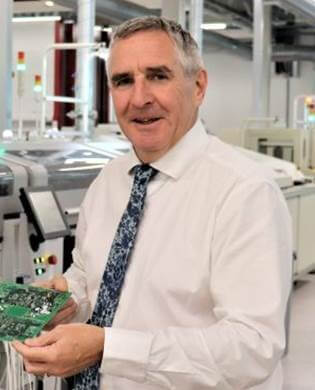
Mike Keegan, Head of Research and Development at Ei Electronics, takes up the story. “The Ei207 and Ei208 Carbon Monoxide alarms required third-party approval of the software and its development process in accordance with EN 14604 and EN 50271 (a derivative of IEC 61508). The standards’ rigorous approach to software engineering dovetails perfectly with the Ei ethos of continuous improvement, so we were very happy to embrace them.”
EN 14604 “Smoke alarm devices” is a high-level standard specifying requirements, test methods, performance criteria, and manufacturer’s instructions for smoke alarms used in residential applications. Its guidelines have an impact on software development from the perspective of the system behaviour and performance required, rather than how they are achieved.
EN 50271 “Electrical apparatus for the detection and measurement of combustible gases, toxic gases or oxygen – Requirements and tests for apparatus using software and/or digital technologies” is the sector-specific functional safety standard. It is derived from IEC 61508, and the software development processes EN 50271 describes reference IEC 61508 extensively.
EN 50291-1 “Electrical apparatus for the detection of carbon monoxide in domestic premises” briefly mentions software controlled apparatus, simply requiring developers to fulfil the requirements of EN 50271.
IEC 61508 describes how to apply, design, deploy and maintain automatic safety-related systems. It is a basic functional safety standard applicable to all industries. It defines functional safety as: “part of the overall safety relating to the EUC (Equipment Under Control) and the EUC control system which depends on the correct functioning of the E/E/PE safety-related systems, other technology safety-related systems and external risk reduction facilities.” The underlying principle is that any safety-related system must work correctly or fail in a predictable, safe way.
Commercial pressures make it essential to minimise any impact on productivity resulting from the adherence to standards. The availability of an effective route for both the initial adoption of the selected tool chain and for its ongoing development were therefore key factors in the decision to acquire the LDRA tool suite.
Ei’s requirements were as extensive as the IEC 61508 V-model suggests. The list of important factors included static analysis and coding standards compliance checking, unit test and code coverage capabilities, cost, and ease of use. It was especially important to Ei that the tools they selected were capable of seamless automation.
The LDRA tool suite not only ticked all the boxes. The workflow promoted by its integrated environment also supported the adoption of the V-model, guiding developers through the development life cycle.
“The standards’ rigorous approach to software
engineering dovetails perfectly with the Ei ethos of continuous
improvement, so we were very happy to embrace them.”

“Our initial use of the LDRA tool suite has helped us to focus the development on increased software quality and validation” mused Mike. “The project was also a learning experience, helping us to find out more about the tool and its potential. We are now looking to better integrate the LDRA tool suite and the rest of the tool chain into the development lifecycle to realise the full benefit.”
“The next project will involve the development of a combination alarm device. Multi-sensor smoke detection using heat and photoelectric sensors will be coupled with an electrochemical carbon monoxide sensor. This product will be the first of its kind for the company and the firmware will be the most complex because of the increased number of sensors.”
“In order to help us tackle this latest project, the LDRA tool suite will be integrated within our Continuous Integration / Continuous Development (CI/CD) pipeline to handle static analysis and regression unit testing. Metrics from static and complexity analysis will form some of the automatic pass criteria for Git pull requests.”
“TBmanager will be used in conjunction with Microsoft Excel for requirements tracking.” Mike concluded.
“In order to help us tackle this latest project, the LDRA tool
suite will be integrated within our Continuous Integration /
Continuous Development (CI/CD) pipeline”
Email: info@ldra.com
EMEA: +44 (0)151 649 9300
USA: +1 (855) 855 5372
INDIA: +91 80 4080 8707
